Part 2 of our “Smorgasbord of Food Offerings from the Sea” series |
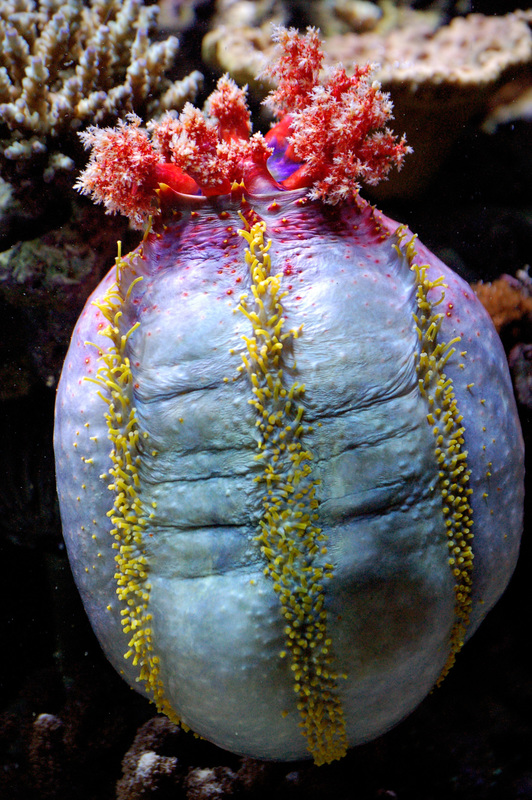 Photo by I, Marrabbio2 [CC BY-SA 3.0, via Wikimedia Commons] | 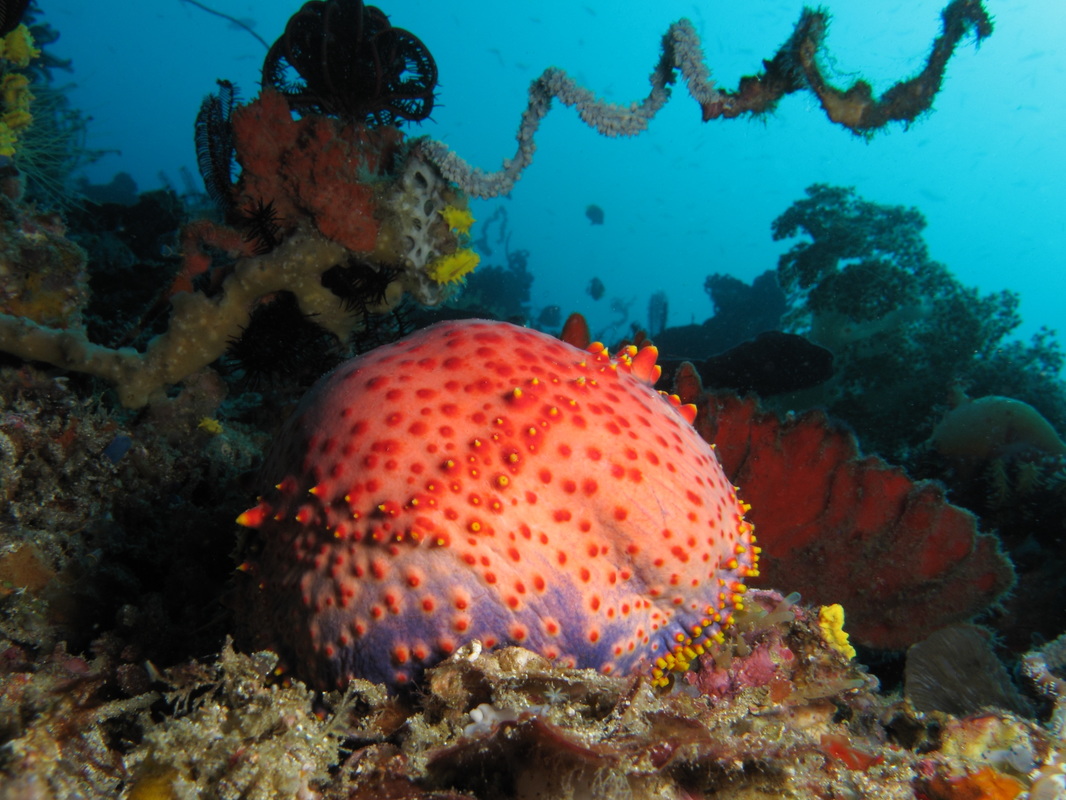 Photo by Alexander Vasenin (Own work) [ CC BY-SA 3.0, via Wikimedia Commons] |
As filter feeders, they mainly eat plankton and commonly eat at night to protect their feathery tentacles from predators. During the day, they curl up into their protective, spherical-like shape.
Amazing Fact #2: Their tentacles are stuffed into their mouths and covered in mucus. Then they are waved around in the water and back into their mouths to scrape the plankton off.
Amazing Fact #2: Their tentacles are stuffed into their mouths and covered in mucus. Then they are waved around in the water and back into their mouths to scrape the plankton off.
So what do they do if a predator is ready to take the proverbial bite out of the apple? Sea apples have options in the way of defense mechanisms: They can release a toxin into the water to deter their predator--apparently not very tasty stuff. They can also swell up to almost double their size by swallowing large amounts of water. This allows them to be moved quickly to a new environment by water currents--quicker than walking using tube feet! Or they can utilize another method which leads us to--
Amazing Fact #3: They can eject their insides as a distraction and diversion in order to escape. Ugh!
What do they contribute, you might ask? As filter feeders, they "clean up" the water and recycle nutrients back into the food web.
They are mainly caught for aquariums but are difficult to keep alive because of their feeding requirements - it is hard to keep them supplied with enough plankton and they can easily starve. Plus they don't get along with other creatures in the aquarium. (See previous comments about defense mechanisms.)
So how about some lightly sautéed, sliced sea apples to go with that grilled sea pork? Yum yum!
0 Comments
Leave a Reply.
Crustaceans, symbioses, and so much more.
Posts by Unit staff, volunteers, interns, affiliates and collaborators highlighting our research, collections activities, and critters we just think are cool.
Archives
April 2016
March 2016
February 2016
 RSS Feed
