Crustacean/
​Non-Molluscan Invertebrate UnitNorth Carolina Museum of Natural Sciences
  • Home
  • Research
  • Who we are
  • Art & Science
  • Learn More
  • Crayfish Resources
  • Publications
  • Collections

Sea Pork - Weird and Wacky and Amazing!

2/23/2016

0 Comments


Part 1 of our “Smorgasbord of Food Offerings from the Sea” series
By Janice Edwards

Did you know that the organism commonly referred to as sea pork is a type of tunicate, a marine invertebrate animal belonging to a subgroup of the phylum Chordata?

Weird fact #1: The phylum Chordata not only includes the ‘lowly’ tunicate but also humans. Something called a notochord (which in humans develops into part of the spine) is one of several characteristics that are common among chordates. In tunicates, the notochord is found only in the tail of larval forms; adults lose the typical defining chordate characters.     

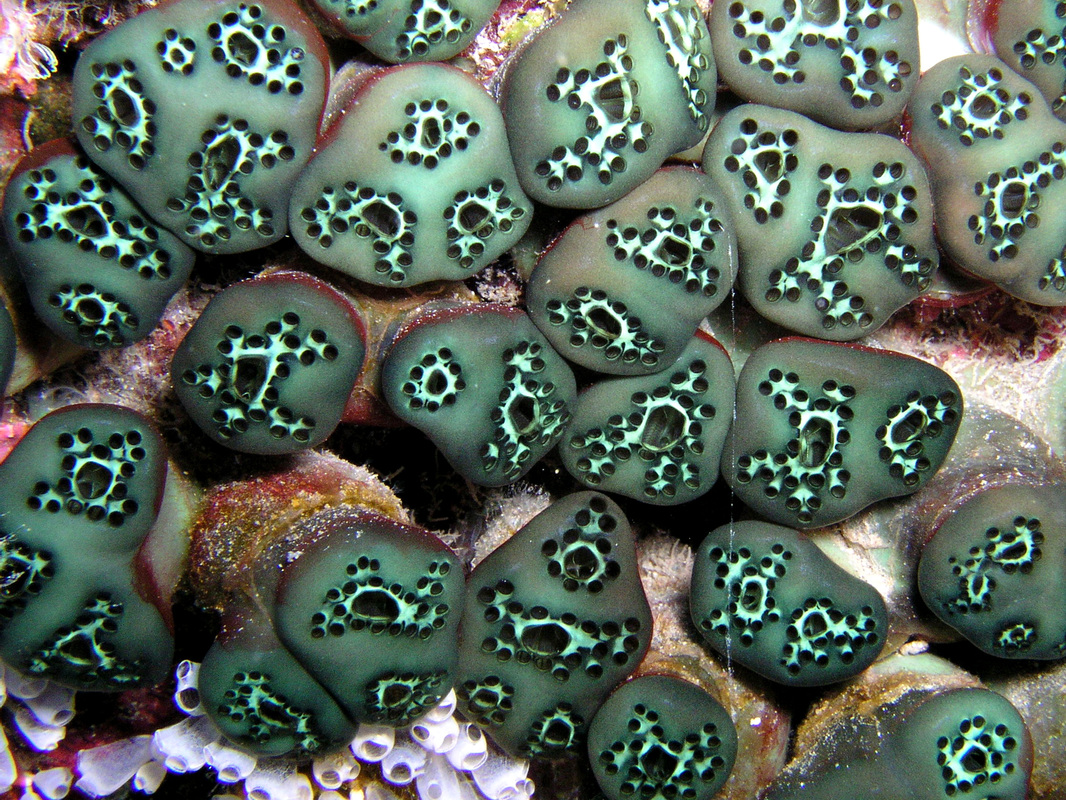
Tunicates can be solitary organisms or can gather together in colonies. Sea pork is a colonial tunicate that lives along the east and Gulf coasts of the U.S. Some huge colonies of tunicates have become invasive in places like the Puget Sound area of Washington. Sea pork is sub-tidal and can often be found attached to pilings, docks, as well as washed up on beaches.

The name tunicate comes from the thick, protective tunic surrounding their often barrel-shaped bodies.

They are filter feeders and, as such, have two tubular openings, one called the incurrent for taking in water full of oxygen and food particles and the other called the excurrent for expelling waste. Now we know why some tunicates are known as "sea squirts!" They even have a well-developed circulatory system with a heart, simple vessel tubes, and green (ugh!) blood.

Some tunicates can be ugly, grayish or brownish-looking blobs, whereas others can be quite colorful. S
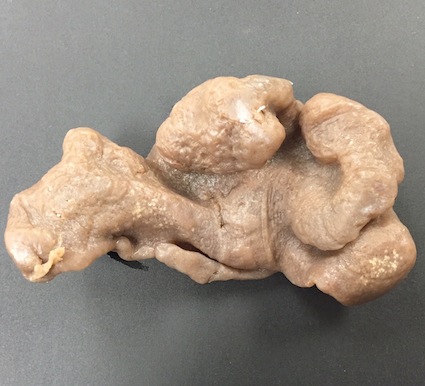
ea pork can be found sporting a wide range of colors including black, green, red, pink, and purple. After death, these colors fade, resulting in the pork-like appearance for which the species was named. 
​
Sea pork in the NCSM Non-Molluscan Invertebrate Collection. Photo by Janice Edwards.
Photo by Nhobgood Nick Hobgood (Own work) [CC BY-SA 3.0 or GFDL, via Wikimedia Commons]
​
​Weird fact #2: There is a species of predatory tunicate, sometimes known as Ghostfish, that live anchored in the deep sea whose "in" tube is shaped like a mouth. This hood-like mouth opens and closes on tiny organisms that drift or swim inside. Kind of like a Venus flytrap of the sea! Check out the cool video below!


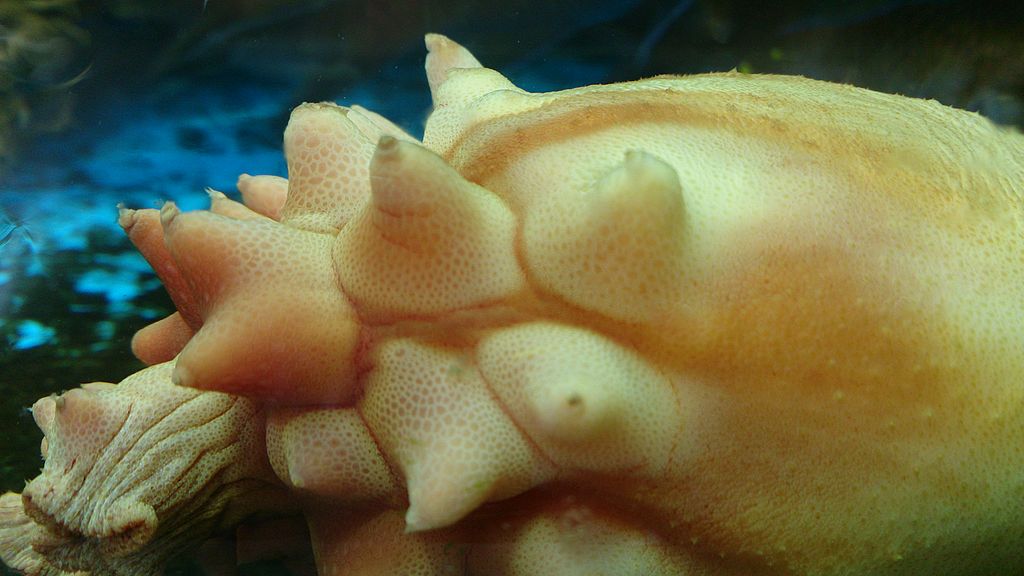
​Weird Fact #3: People from some Asian cultures eat tunicates known as sea pineapples. Bright red, orange, and white with a barrel shape, they can be found piled up for sale in market stalls.

Sea pineapples. Photo Credit: ProjectManhattan; Creative Commons CC0 1.0 Universal Public Domain Dedication
Sea pineapple. Photo Credit: ProjectManhattan; Creative Commons Attribution-Share Alike 3.0 Unported license

This brings us back to our menu offering for this week--the common sea pork.

​Marinated in teriyaki sauce, grilled over charcoal to give it that smoky flavor, and, finally, served with a nice seaweed salad. Grilled sea pork, anyone?
0 Comments


Leave a Reply.

    Crustaceans, symbioses, and so much more.

    Posts by Unit staff, volunteers, interns, affiliates and collaborators highlighting our research, collections activities, and critters we just think are cool.

    Archives

    April 2016
    March 2016
    February 2016

    Categories

    All
    Marine Life
    Parasite
    Symbiosis

    RSS Feed

Powered by Create your own unique website with customizable templates.
  • Home
  • Research
  • Who we are
  • Art & Science
  • Learn More
  • Crayfish Resources
  • Publications
  • Collections